I wanted to make a painting for the Dorran family, one of Ravel’s wealthiest families.
Their ancestors helped build the city. Today they own quarries, building contracts and a great deal of land. I wanted their home to tell us something about them before anybody spoke.
What would they put on the wall? What would they want a visitor to admire?
To answer that, I had to go back into their history. A family with this much money and influence didn’t get there yesterday.
That brought me to Haren Dorran, the ancestor at the centre of the painting. He was a successful military commander who saved his quartermaster’s life during a war. She organised the army’s supplies.
He later became a governor, applied military supply rules to ordinary households, and punished people who couldn’t comply. He was eventually removed.
His descendants have a real act of courage to celebrate, and a later disgrace they would probably rather not discuss. I could see why they might commission a huge painting of the rescue. Show visitors the heroic ancestor. Give them the family’s version of what deserves to be remembered.
Inside the work
The first paintings weren’t getting there.
I’ll be honest: I was underwhelmed by the earlier paintings. Too many looked like a page from the comic had been put on cloth. These are two of those explorations.
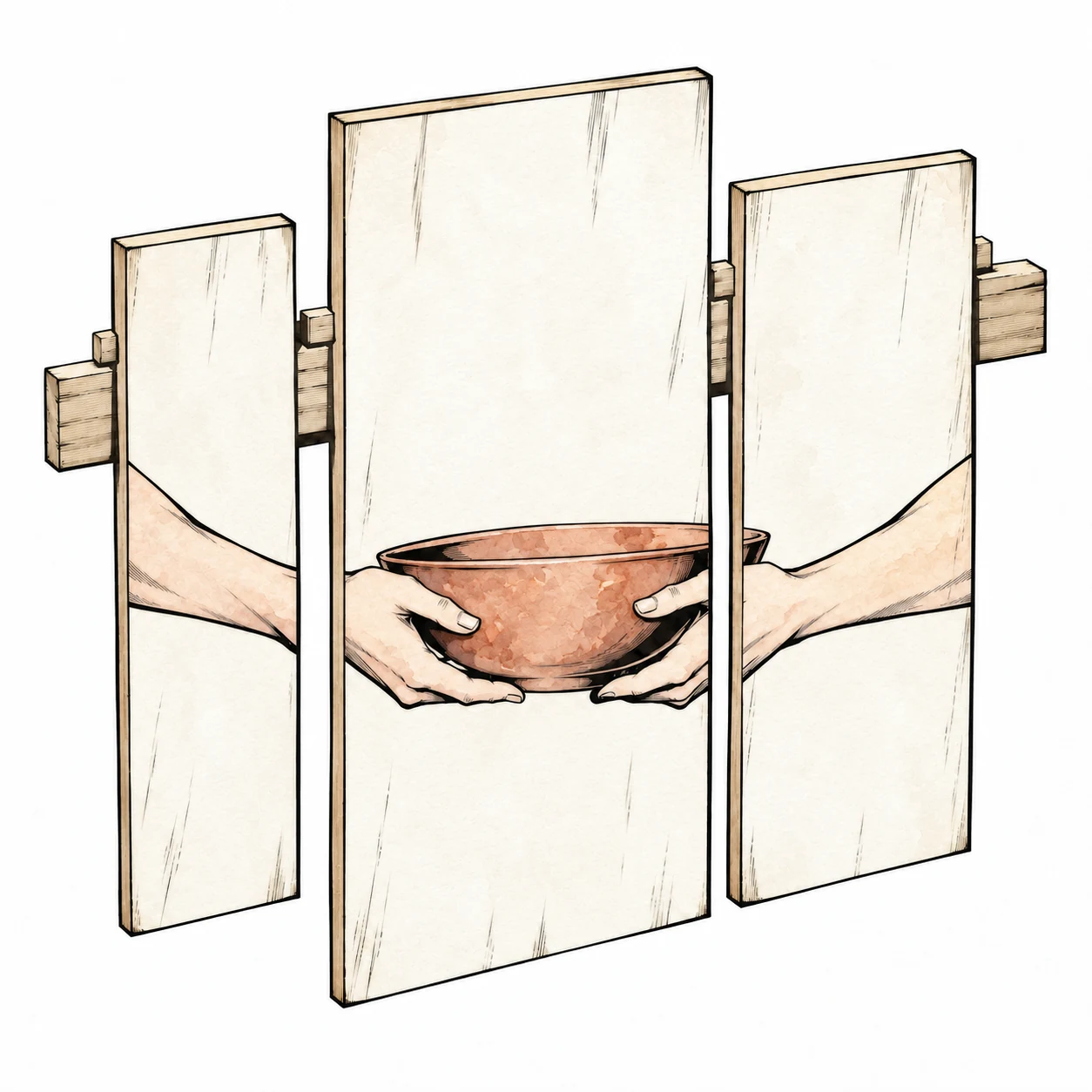
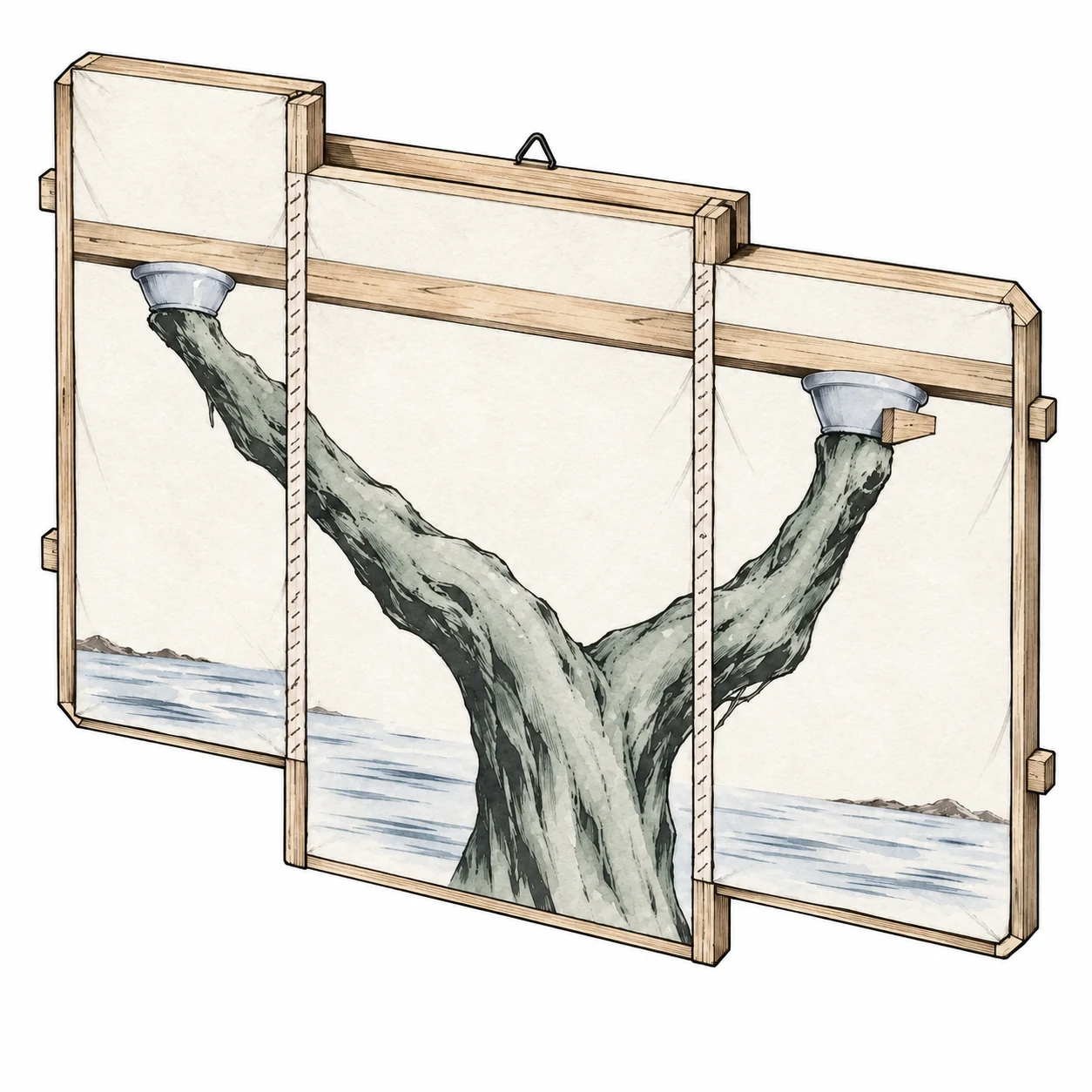
The subjects had reasons to exist. But I wanted the art to feel as though someone living in this world had made it. Someone with opinions. Someone who might exaggerate a face, bend a landscape or make a hero absurdly large because that was how they wanted him remembered.
I’d spent all this time thinking about the civilization and was being far too cautious with its art. I wanted more risk, more distortion, more life in the writing and the brushwork. I kept the earlier pieces, but changed the direction.
Haren gave that change a purpose. His descendants would be paying for the picture. The painter didn’t need to be fair to everyone in it.
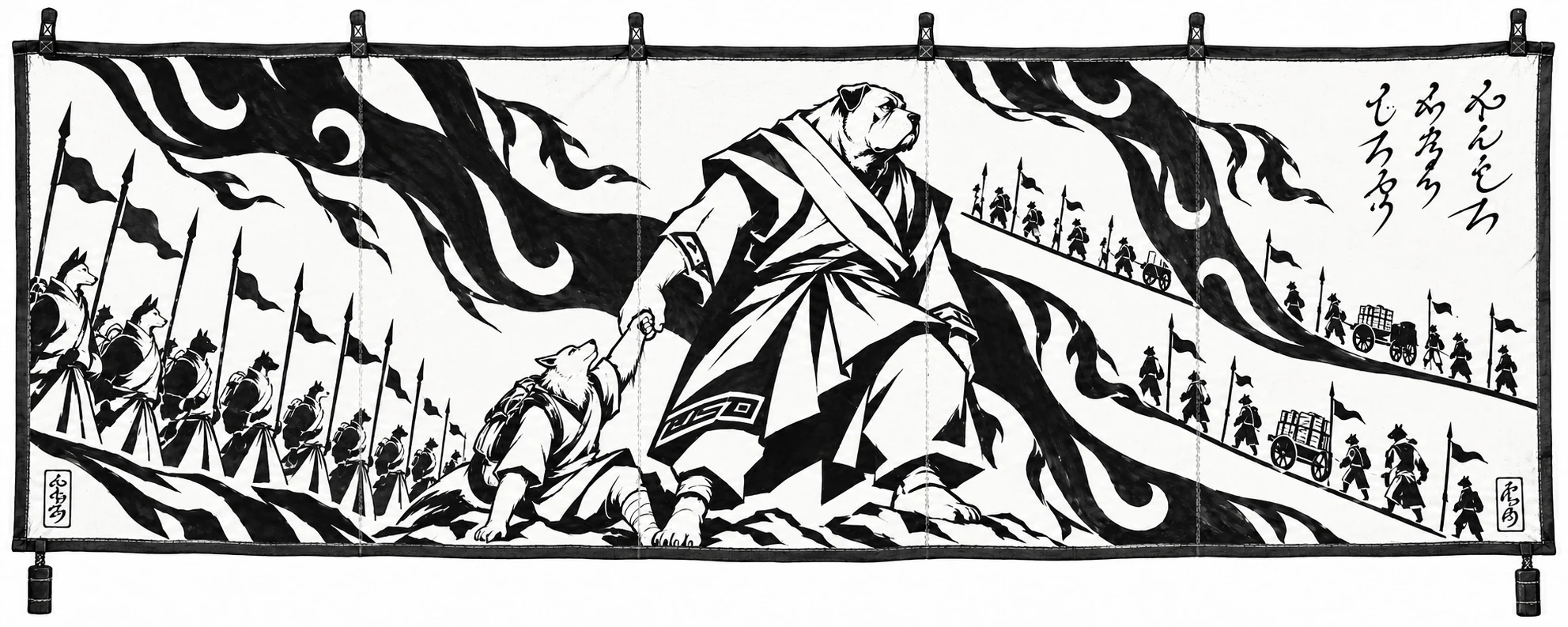
The first banner drawing already had a huge Haren. But the road on the right still winds into the distance, and the tangled roots are carefully described. It shows the scene. I wanted it to push the family’s version harder.
In the second drawing, the road becomes two flat bands. People turn into small, repeated silhouettes. The roots become great black curls. Almost everything around Haren now helps make him look enormous.
With that drawing settled, I moved to colour: red on his coat, teal across the roads, black roots against ochre. I wanted the painting to catch the eye from across the room, with smaller figures to discover when you came closer. One of them matters quite a lot.
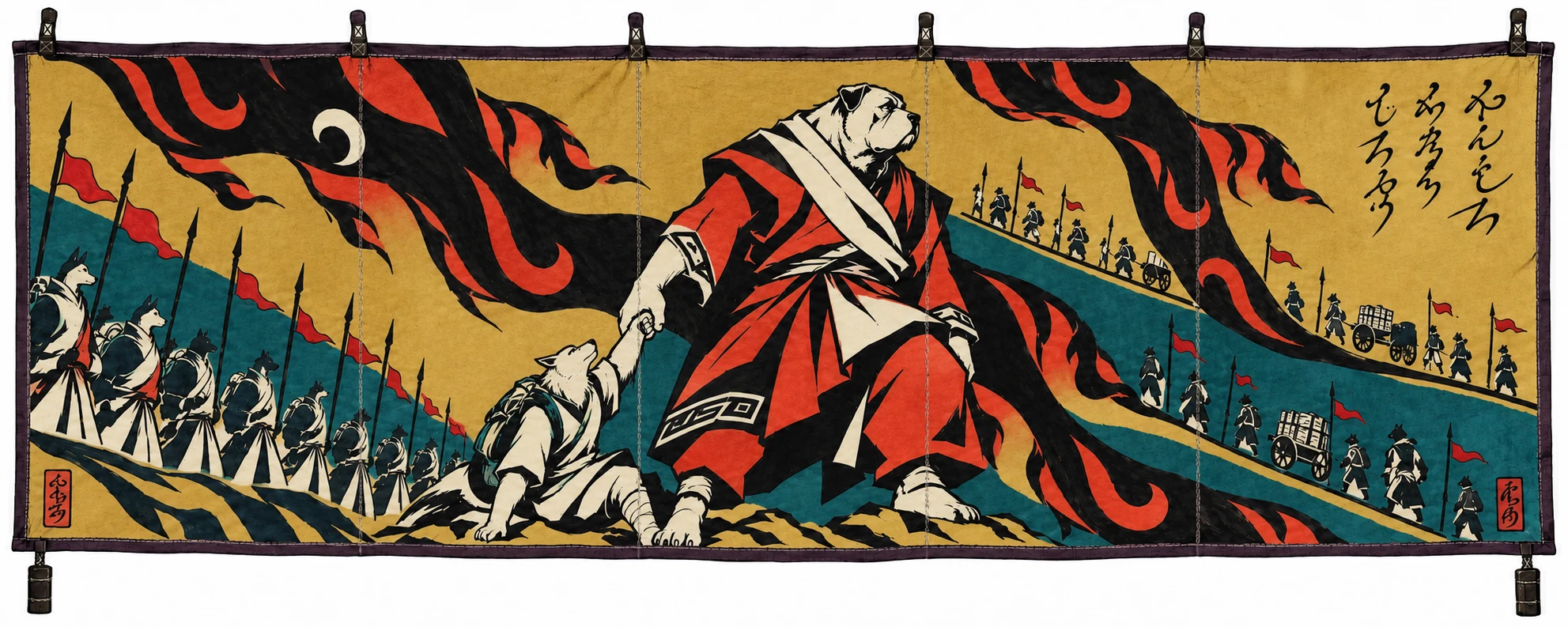
The person his family might rather leave out.
The quartermaster whose life Haren saved later publicly demanded his removal as governor. She still credited him with saving her. She also opposed what he was doing to the people he governed.
That gives them a history together before they become opponents. Her gratitude is real. So is her reason to distrust him. A later generation of Dorrans even builds a public stair in her honour, though several relatives dislike attending its anniversary.
What I’m learning
The world has to exist before our heroes arrive.
This keeps happening as I build Verdant. I add a painting, a tool, a piece of clothing, a way of writing, and it sends me back into the past. Who made it? Who could afford it? Why did someone want it badly enough to pay for it, keep it, pass it down?
A wall needs people to build it and someone to pay for the work. In the Dorrans’ history, building walls created safe ground for homes. The family received leases as payment. Those leases became wealth that their descendants still benefit from. Now the architecture tells me something about who has power, and why.
The painting does the same thing. It gives me a family trying to control how people remember an ancestor. It also gives me people who know perfectly well what they’re leaving out.
I can imagine a wealthy guest admiring this huge banner, being very polite about it, then laughing about it on the way home. The Dorrans are trying to make everyone remember the hero. Their guests may spend the evening discussing the disgraced governor instead. That is an expensive way to give people something to gossip about.
Nothing in that possible encounter needs one of our heroes to start it. The pride, the discomfort and the reasons to take sides are already there. When we pick up the story, the characters enter a world where other people have been living, building, helping each other and falling out for hundreds of years. Their choices have somewhere to come from.
I don’t need to explain all of that every time a character walks into a room. But I want to know enough that the room, the people in it and the way they treat each other make sense. A painting can quietly do some of that work.
I love this part. The scale of it also scares the hell out of me. My brain is overheating over generations of family politics, and I’m still supposed to be choosing things for a living room.
And this is what else is on the desk.
One painting has a lot of neighbours.
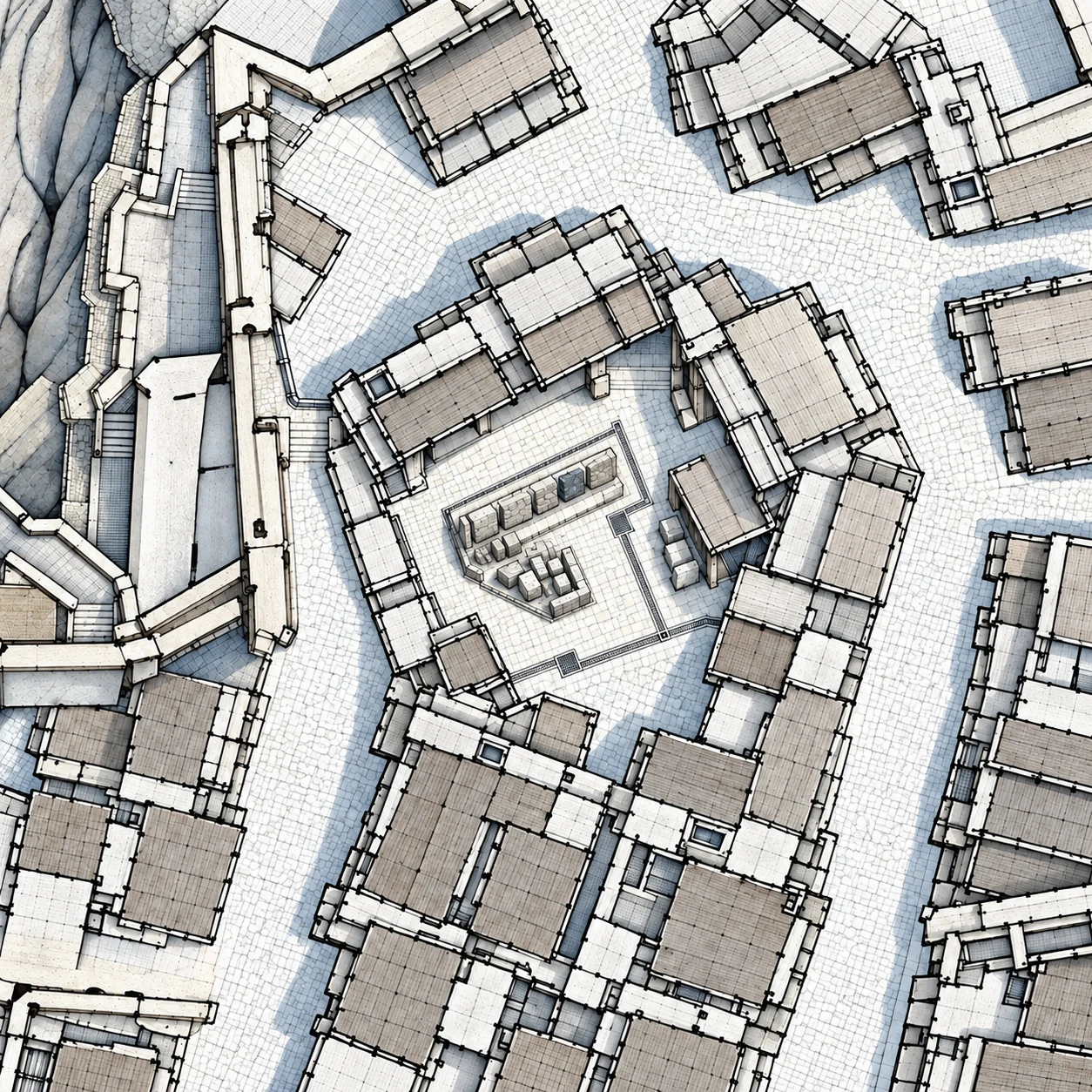
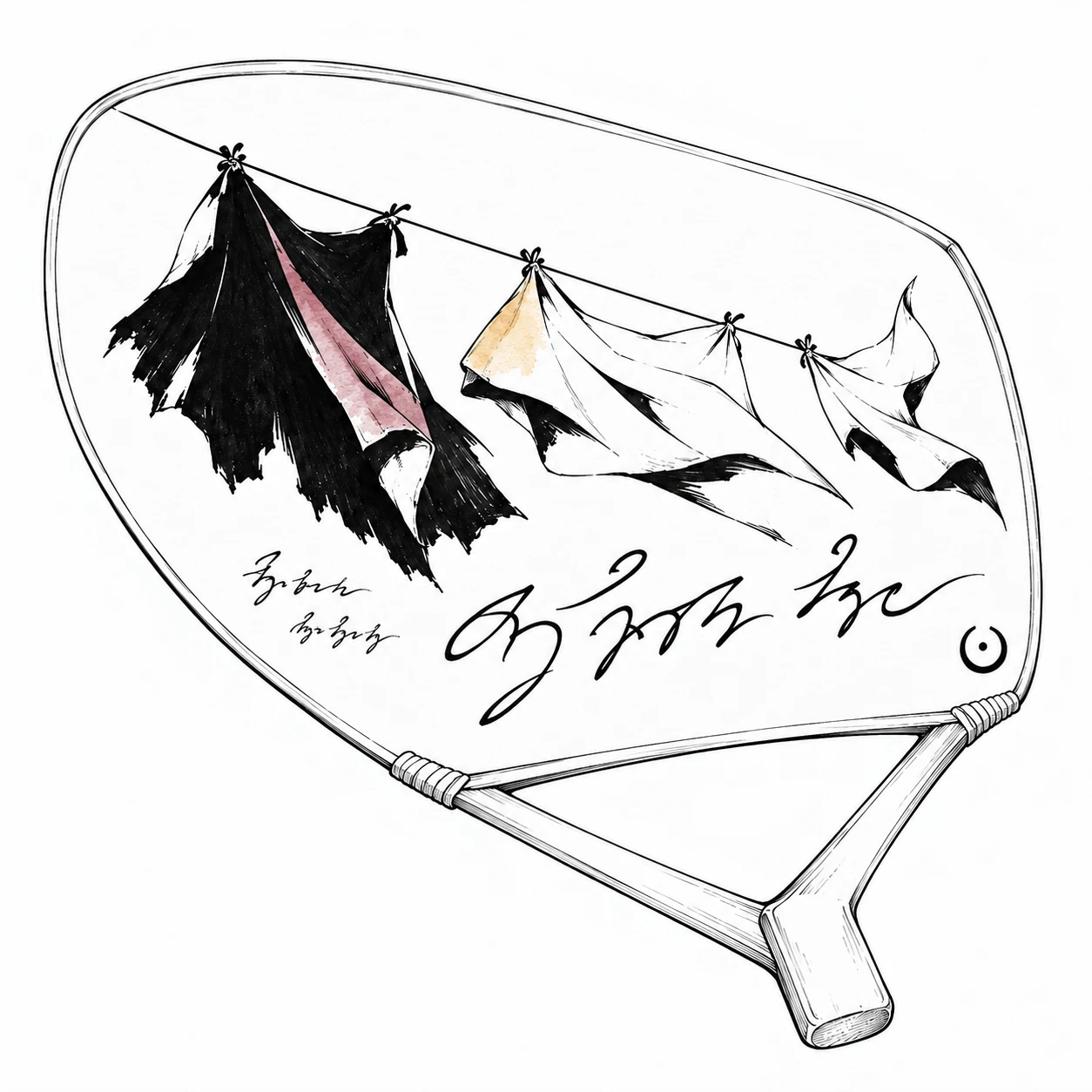
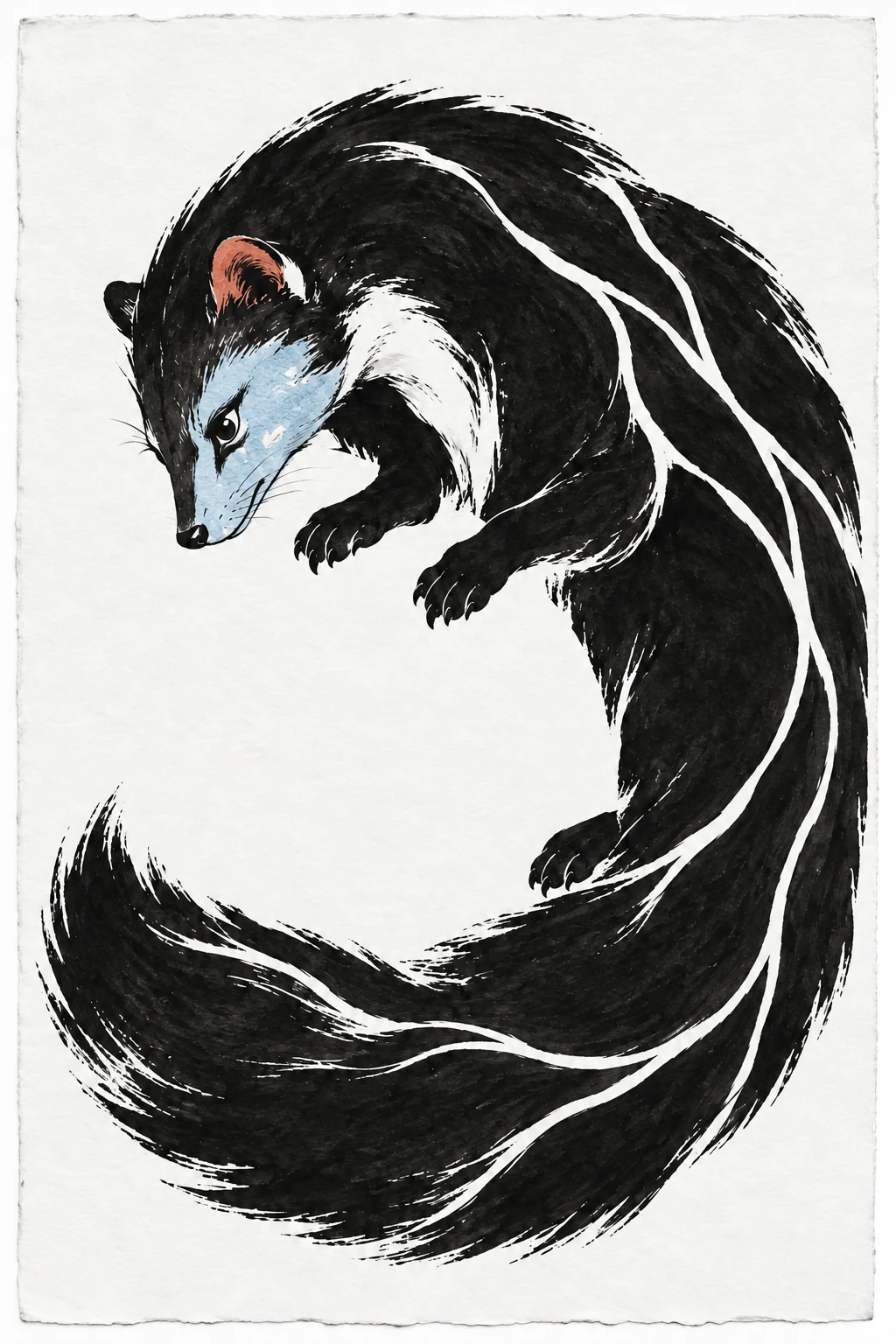
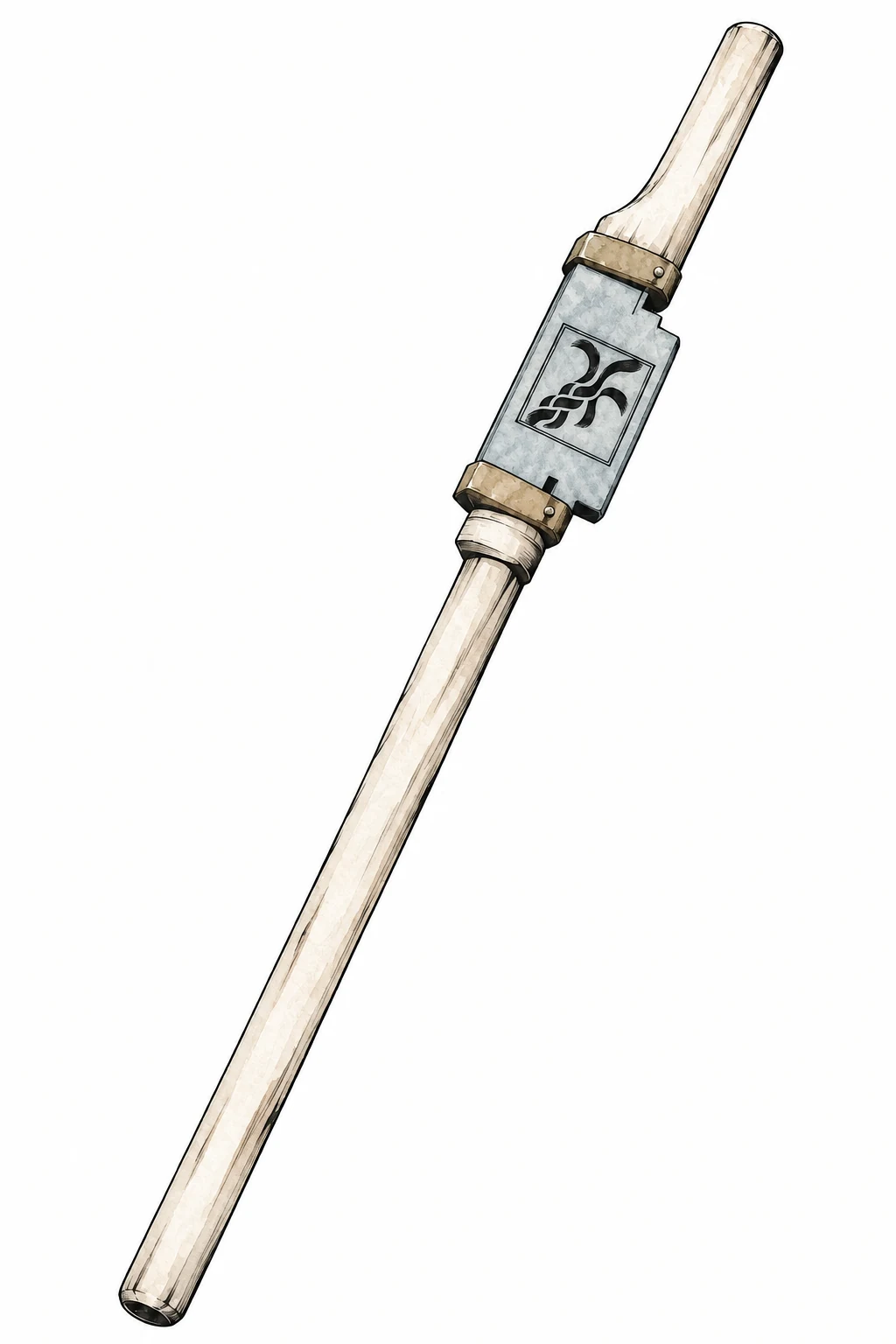
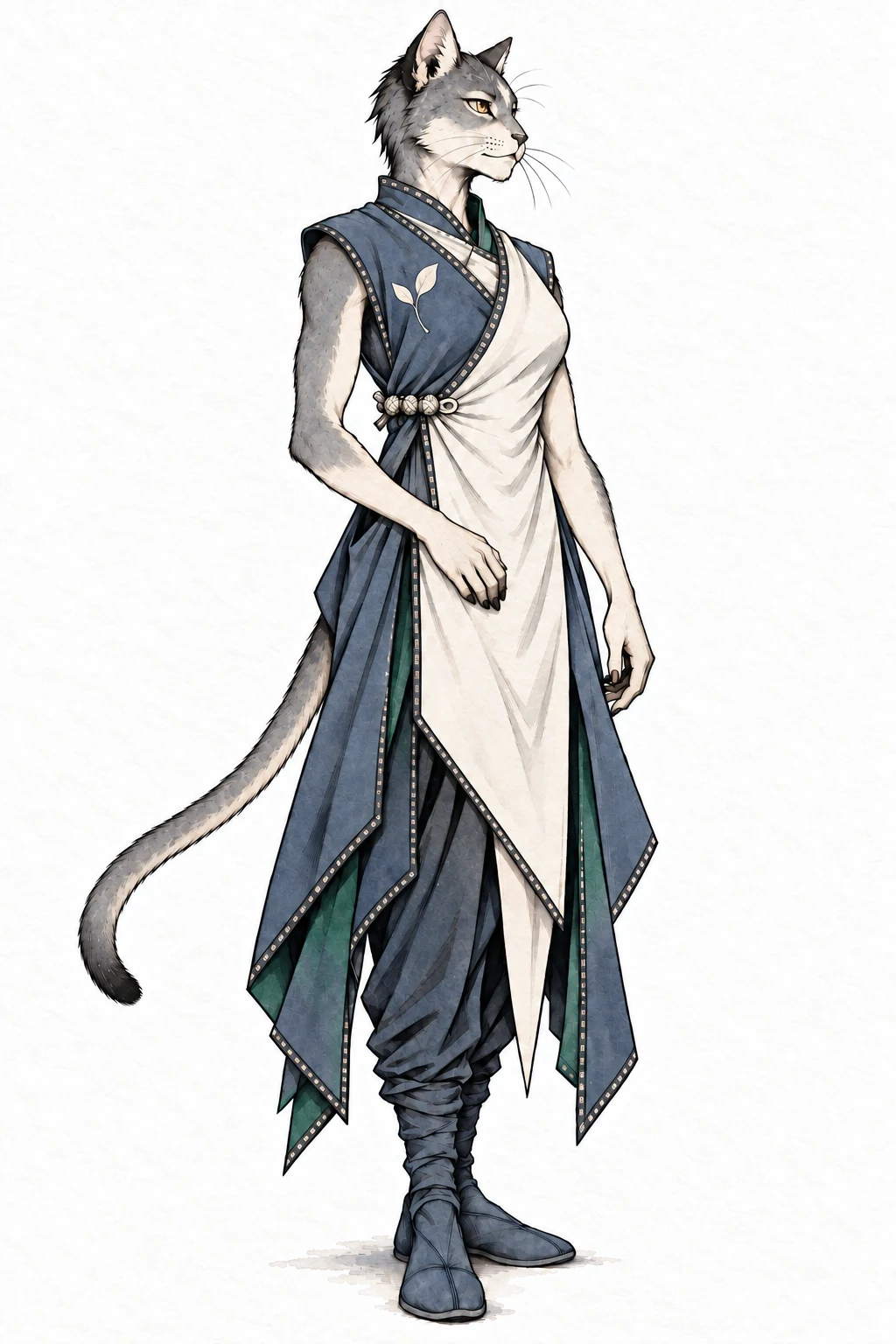
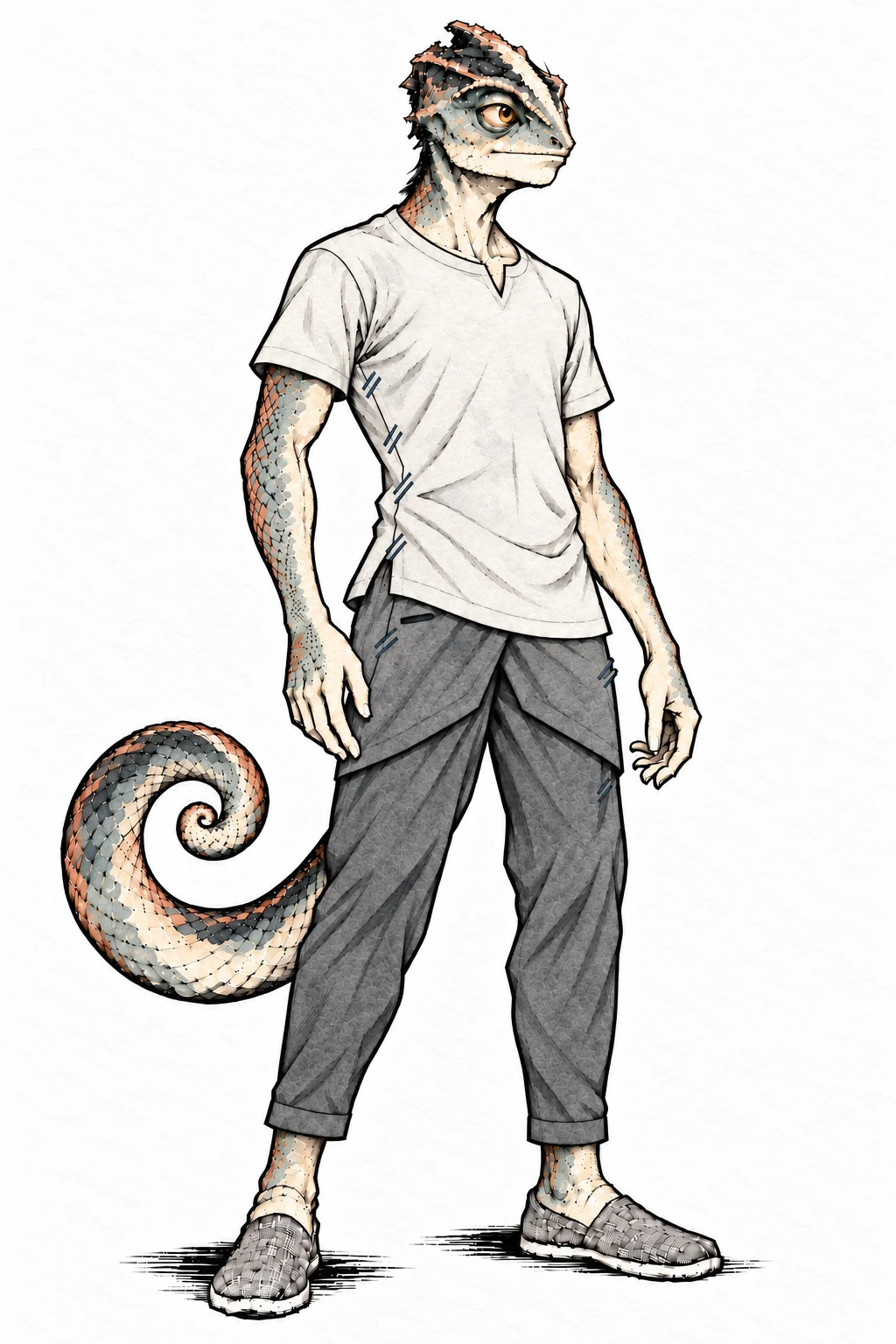
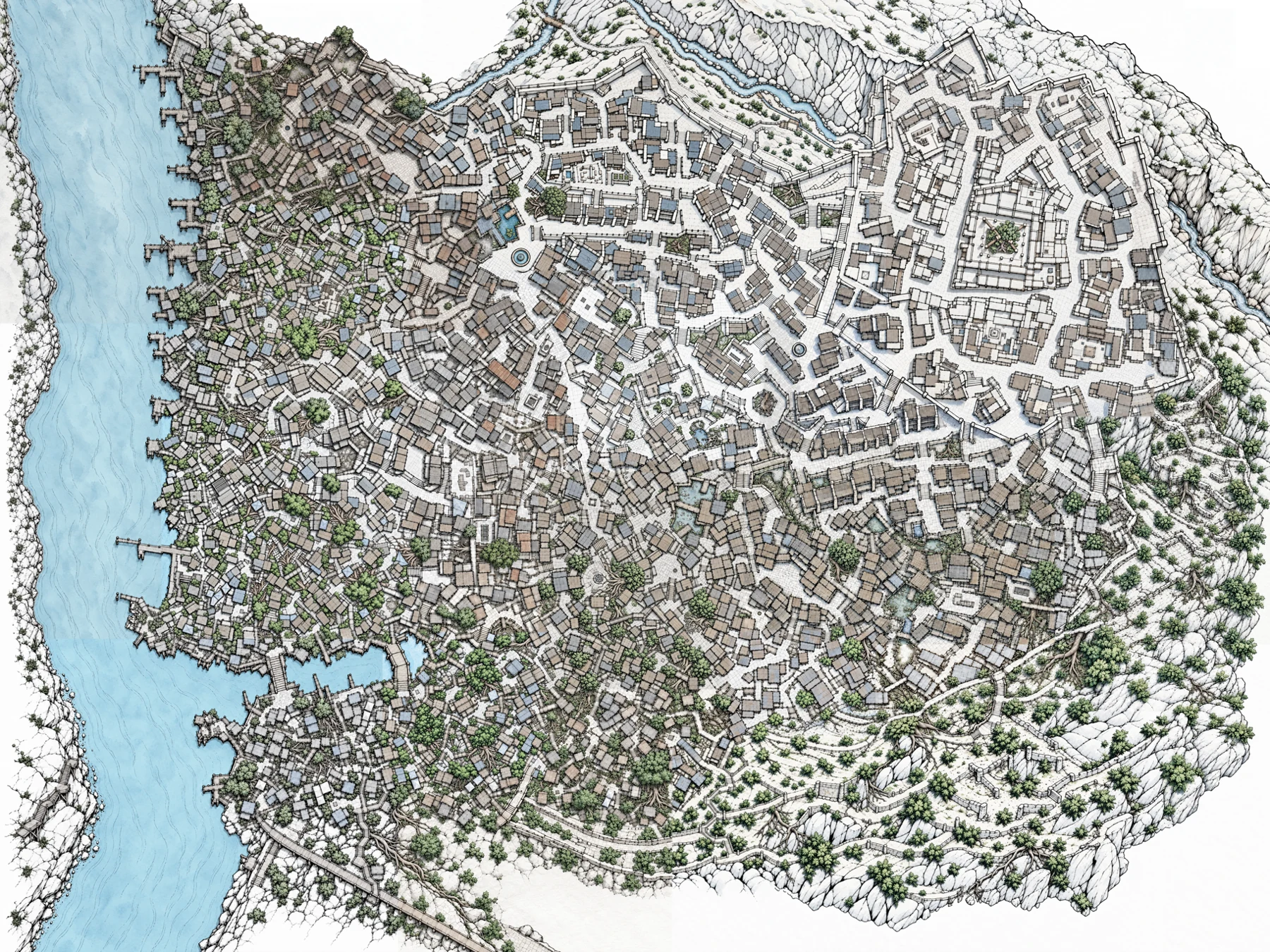
Existing studies from across the project. Clothes, objects, beliefs, public authority, homes, people and the city around them. All still being worked on.
About these studies
The courtyard is a roof-map study. The fan, sacred print and watch tab are individual design proposals. The character and clothing studies retain their original scoped selections. The city view records an earlier assembly with known detail loss; it is not a completed map or proof of the later height model. Open each image to see the full study.